


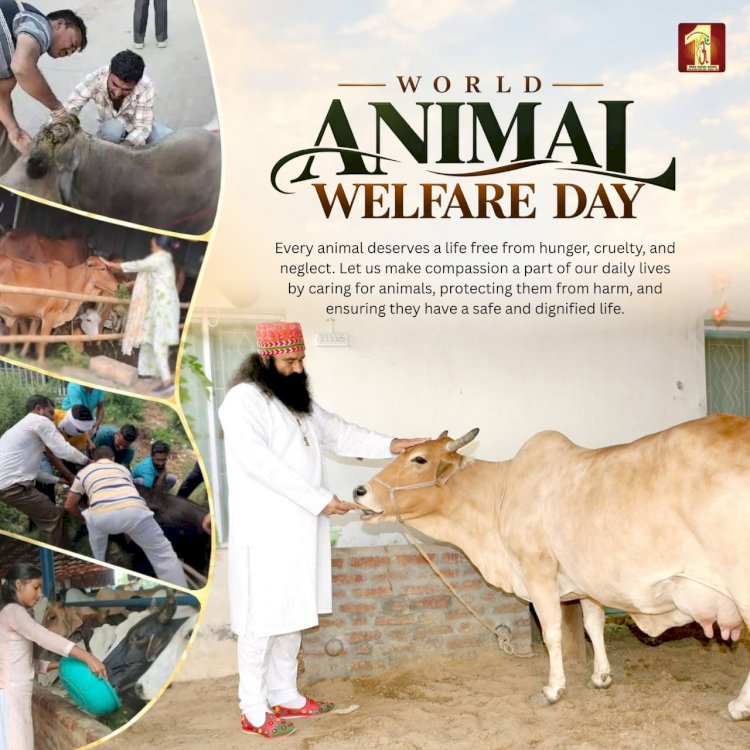
A Voice for the Voiceless: Beyond Words, Beyond Species
They cannot tell us where it hurts.
They cannot ask us to save them.
They cannot explain their fear.
And yet, they feel pain. They feel hunger. They seek shelter. They struggle with injuries, illness, abandonment and the dangers of roads and human environments—often without anyone knowing the extent of their suffering.
Across the world, animal welfare is no longer simply a matter of kindness; it is closely connected with public health, environmental sustainability, biodiversity and the values by which societies measure their humanity. The World Organisation for Animal Health (WOAH) has reported that animal diseases are reaching new regions and species, with 47% of the diseases reported in its first global animal-health assessment having zoonotic potential—a reminder of the interconnectedness between animal and human wellbeing.
Yet behind every statistic is something far more immediate:
A life.
A wounded dog lying beside a road.
A cow trapped in a ditch or well.
A bird unable to fly.
An abandoned animal searching for food.
A creature standing helplessly in the darkness of a busy road.
And that brings humanity face to face with a profound question:
How do we treat those who cannot speak for themselves?
For Revered Saint Dr. Gurmeet Ram Rahim Singh Ji Insan, compassion is not confined by species. Through His Holiness’s Divine Sermons, He has repeatedly inspired people to recognise the suffering of every living being and transform compassion from a feeling into selfless action.
That vision has found a living expression through the humanitarian initiatives of Dera Sacha Sauda and its volunteers, where caring for animals is not regarded as an occasional act of kindness, but as a continuing responsibility towards life itself.
If we have the ability to help, why should we walk past?
Across different states, cities and blocks, Revered Saint Dr. Gurmeet Ram Rahim Singh Ji Insan’s love for animals has inspired a remarkable culture of compassion in action. His Holiness has Himself demonstrated deep affection and care for animals, translating that compassion into practical humanitarian initiatives and inspiring devotees to carry the same spirit into society.
From “Stop the Massacre” and “Securing Life”, which promote non-violence and protection of living beings, to “Save Life”, which focuses on providing stray animals with shelter, food and medical care; from “Protection”, encouraging the use of leftover crop stalks as animal fodder instead of burning them, to “Protect”, where reflectors are placed on animals’ horns to make them more visible to motorists at night—these initiatives translate compassion into concrete action.
Other welfare works include caring for domestic animals so they never become strays, feeding animals and birds by setting aside a roti, and making roads safer by removing hazards and animal carcasses.
Following this guidance, devotees across numerous states, cities and blocks have rescued and cared for lakhs of animals, giving injured, abandoned and helpless creatures a second chance at life.
The scale of this service is reflected in extraordinary individual efforts too. In numerous instances, a single volunteer has helped save more than 500 animals through rescues, treatment, feeding, shelter and other forms of care—all inspired by Revered Guru Ji’s guidance.
Sometimes the rescue is dramatic—a cow or buffalo trapped inside a well and brought safely to freedom. Sometimes it is quieter: an injured animal found on a roadside, a bird unable to fly, or a stray dog suffering from severe wounds and infection.
But whether the rescue makes headlines or happens quietly on an ordinary day, the principle remains the same:
See the suffering. Step forward. Save the life.
Small Acts, Extraordinary Impact
Revered Guru Ji’s vision of animal welfare extends far beyond rescue. It encourages a culture in which every person can become a protector of life through simple, practical acts of care.
- ???? A Roti for a Hungry Life — Compassion Begins at Home
One of the simplest welfare practices is to set aside a roti for animals and birds every time we eat. What may seem like a small gesture can become a daily expression of compassion. Devotees regularly feed stray animals, extending care beyond a momentary act of kindness.
Sometimes, changing a life begins with simply sharing what is already on our plate. - ???? Making the Night Safer — Preventing Tragedy Before It Happens
For animals wandering near roads after dark, invisibility can become a matter of life and death. Volunteers therefore go out at night to place reflective material on the horns of cattle, helping motorists spot them from a distance and reducing the risk of collisions. Volunteers also remove fallen trees, animal carcasses and other dangerous obstacles from roads, helping safeguard both animals and motorists.
True compassion does not always arrive after an accident; it works quietly to prevent one. - ????️ Dignity Even in Death — Because Respect Should Have No Expiry
When an animal dies, the responsibility of compassion does not simply disappear. Volunteers respectfully bury animals found dead on roadsides or in public spaces, preventing their remains from being left exposed and neglected. It is a quiet service, rarely witnessed and seldom celebrated, yet it reflects a profound principle: that a life deserves respect not only while it breathes, but even after it has ended.
Because compassion should not end when life does. - ???? Turning Waste into Nourishment — Protecting Animals and Nature Together
Farmers are encouraged to use leftover agricultural stalks as fodder for animals instead of burning them. What might otherwise be discarded can become nourishment for another living being. It represents a thoughtful meeting point between animal welfare and environmental responsibility—where protecting one form of life can also mean caring for the world around it. - ???? A Vision of Dignity for Every Stray Cow — Revered Guru Ji’s compassion for animals goes beyond words; He has personally envisioned and initiated practical welfare for Gau Mata, including safe spaces where stray cows can live freely with fresh fodder, water, shade, greenery and protection from road accidents and other dangers. The vision also ensures that calves alone receive their mothers’ milk, while dung and urine can be utilised to support their ongoing care. Initiated by Revered Guru Ji on Lohri this year, this work reflects a humble vision of service without commercial motive or personal recognition. Inspired by His guidance, devotees step forward to transform that vision into action, creating not merely shelters, but safer, more dignified spaces where abandoned cows can live with care and freedom.
- ????️ Choosing Protection Over Violence — A Wider Culture of Coexistence
At the heart of these initiatives lies a broader message of non-violence, protection and respect for every living being. The objective is not simply to respond when an animal is injured, hungry or abandoned, but to cultivate a mindset in which unnecessary suffering is rejected altogether.
When compassion becomes a principle rather than an occasional gesture, coexistence becomes possible.
Together, these seemingly simple actions tell a much larger story.
A roti shared.
A reflector placed.
A roadside cleared.
A fallen animal respectfully buried.
A pet never abandoned.
A handful of crop residue turned into fodder.
A stray cow given a safer place to live.
None of these acts requires extraordinary wealth or influence.
They require something far more fundamental:
The willingness to care.
And when thousands of people choose to care, small acts become a movement, and compassion becomes a way of life.
Because the measure of compassion is not only how we treat those who can thank us.
It is how we respond to those who cannot ask.
That is service without boundaries.
Latest Posts
-
-

From heart disease and metabolic disorders to obesity and other diet-related chronic...
-

Inspired by the 176 humanitarian welfare works initiated by Revered Saint Dr. MSG...
-
In 2007, as millions of devotees prepared to celebrate the sacred Incarnation Day...
-

Today, more than 56,000 devotees have pledged to donate their kidneys/organs, with...
-

Youth is the most powerful chapter of life; an age of dreams without limits, energy...
-

Celebrated on the full moon of the Hindu month of Ashadha, Guru Purnima is far more...
-

-

Across the world, medical schools continue to face a shortage of donated human bodies,...
-

Every year on July 3, people around the world observe International Plastic Bag...